ASTM Specifications for Natural Stones

Quarry owners usually prvode us with ASTM (American Society for Testing and Materials) or EN (European) technical data and test results for their own quarry natural stones from their countries certified labs. The test results are an important factor which helps not only classify the natural stone as a particular type, but that it also meets certain standards and criteria (expectations).

For projects that require additional verification, we can arrange for the stones to be tested again in UAE-certified labs. Note that for specific tests, such as Abrasion Resistance, the tests are conducted in UK labs. Any additional testing will incur separate charges.
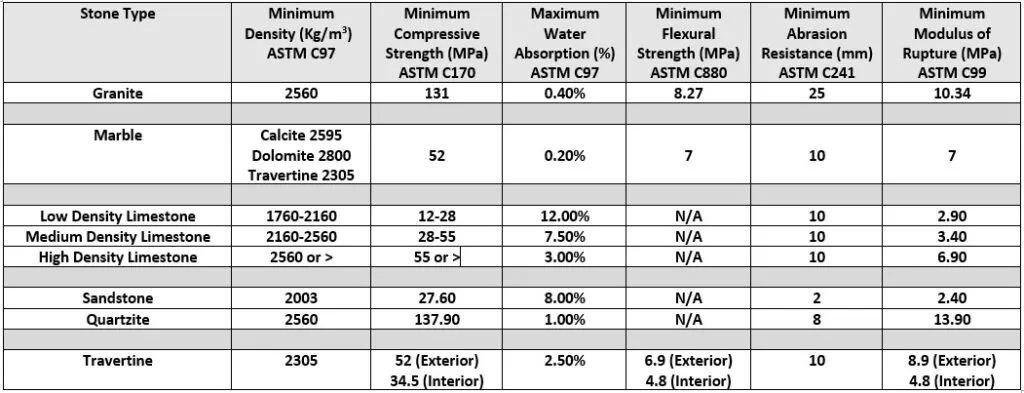
Summary of Minimum and Maximum Values for the Most Widely Sought ASTM Test Results for Natural Stones

Key ASTM Tests for Natural Stones

Below are the most important and commonly requested ASTM tests for natural stones. These tests help evaluate the stone’s performance, durability, and suitability for various applications.
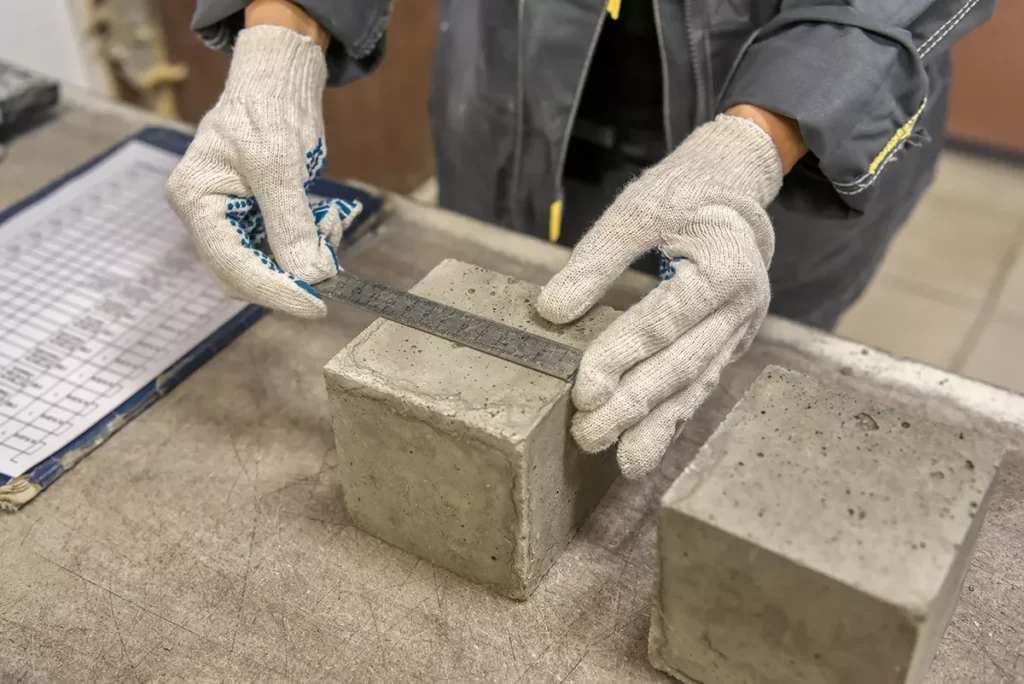
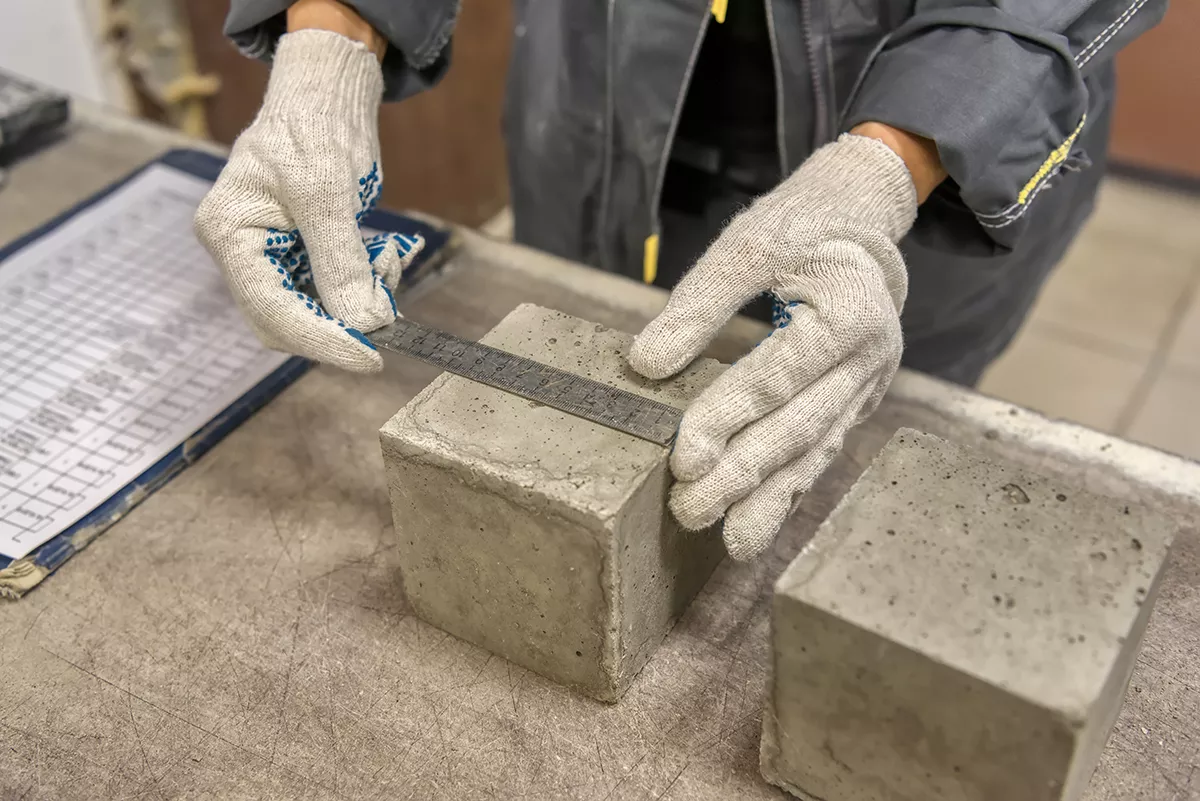
Water Absorption (C97 Test)

This test measures how much water a stone can absorb. It’s crucial for determining whether the stone is suitable for indoor/outdoor or dry/wet environments, ensuring durability and resistance to weathering.

Density (C97 Test)

The density test calculates the mass per unit volume of the stone, providing insight into its strength, durability, and overall quality. Higher density stones are typically more durable and resistant to wear.

Compressive Strength (C170 Test)

This test evaluates how much pressure a stone can withstand before breaking. It’s essential for determining the suitability of stones for structural applications like flooring and heavy-load-bearing surfaces.

Flexural Strength (C880 Test)

Flexural strength measures the stone’s ability to resist bending and cracking, particularly important for exterior cladding in windy or high-stress conditions.

Modulus of Rupture (C99 Test)

This test assesses the stone’s ability to withstand breaking under tension, providing an indication of its strength and resistance to breaking under stress, important for thin stone veneers.

Abrasion Resistance (C241 Test)

This test measures the stone’s resistance to wear and surface damage, particularly for high-traffic areas. It’s being phased out in favor of C1353, which provides more accurate long-term wear predictions.

Water Absorption (C97 Test)

This test measures how much water a stone can absorb. It’s crucial for determining whether the stone is suitable for indoor/outdoor or dry/wet environments, ensuring durability and resistance to weathering.

Density (C97 Test)

The density test calculates the mass per unit volume of the stone, providing insight into its strength, durability, and overall quality. Higher density stones are typically more durable and resistant to wear.

Compressive Strength (C170 Test)

This test evaluates how much pressure a stone can withstand before breaking. It’s essential for determining the suitability of stones for structural applications like flooring and heavy-load-bearing surfaces.

Flexural Strength (C880 Test)

Flexural strength measures the stone’s ability to resist bending and cracking, particularly important for exterior cladding in windy or high-stress conditions.

Modulus of Rupture (C99 Test)

This test assesses the stone’s ability to withstand breaking under tension, providing an indication of its strength and resistance to breaking under stress, important for thin stone veneers.

Abrasion Resistance (C241 Test)

This test measures the stone’s resistance to wear and surface damage, particularly for high-traffic areas. It’s being phased out in favor of C1353, which provides more accurate long-term wear predictions.

No specification for Onyx

Important Note:

Some materials may not meet the exact minimum or maximum requirements outlined in the tables. For example, certain marbles might have a water absorption of 0.30%, while the maximum allowable value is 0.20%. Such differences are considered negligible, and the values are not always treated as absolute limits of minimum or maximum. The limits in the table above were determined based upon repeated tests of a group of natural stones whose results were in close proximity each time.

Explore some of the most sought-after natural stones

Detailed Testing Conditions

Testing Procedures for ASTM Standards

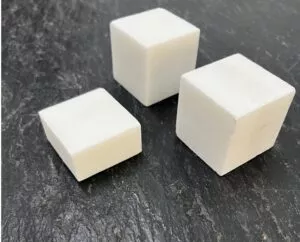
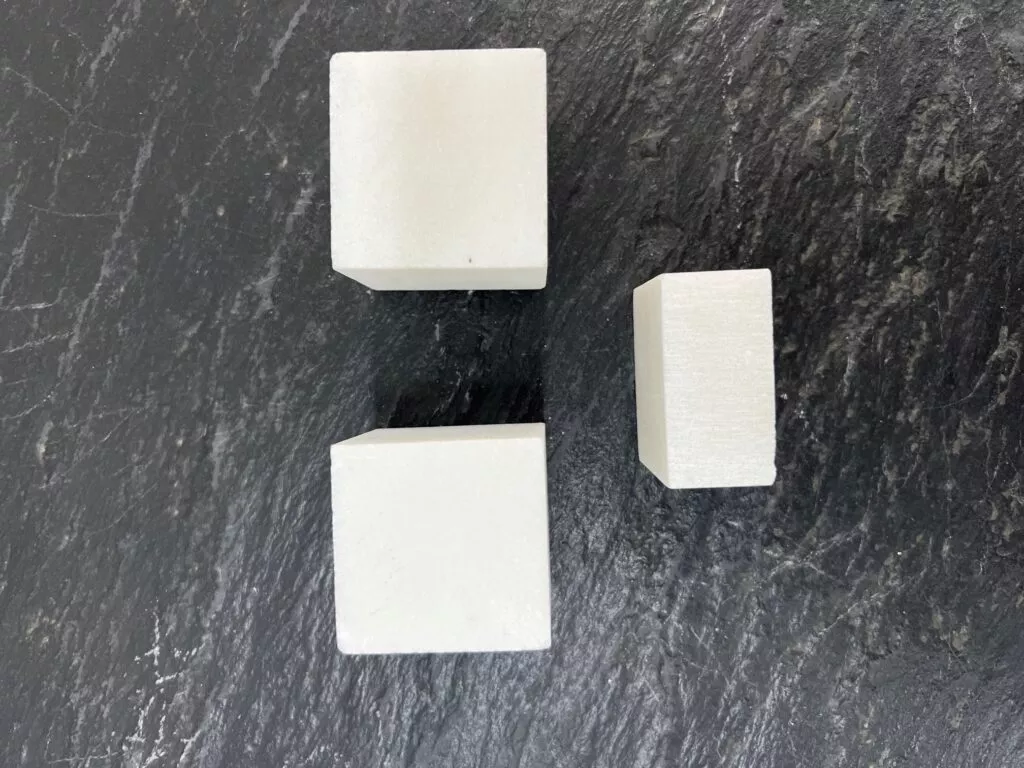
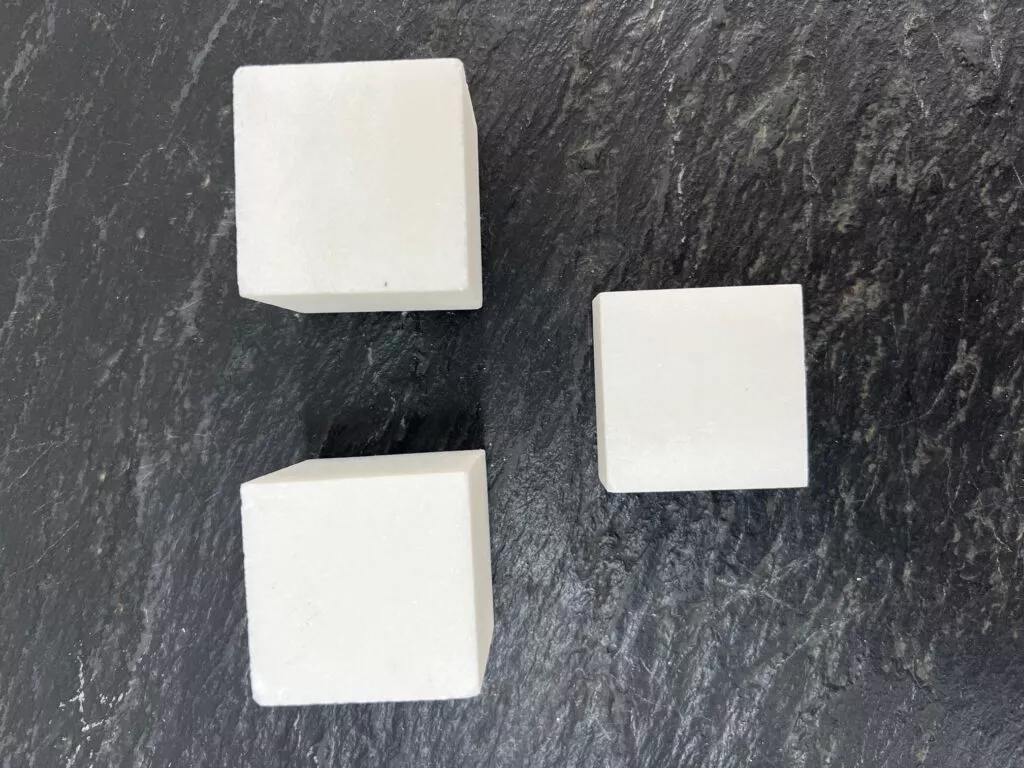
To conduct proper ASTM tests, specific stone specimens need to be provided. Below are the guidelines for sample sizes required for key tests:
Water Absorption (C97) & Density (C97):

For these tests, you will need 10 cube specimens of 50.8 × 50.8 × 50.8 mm.

Compressive Strength (C170):

The same 10 cube specimens as for C97 test are required for test parallel to bedding and in one of two conditions (wet or dry). Wet and dry conditions testing can both be done to verify performance under different scenarios however an additional 10 cube specimen would be required. If there is a need for testing perpendicular to the bedding, an additional 10 specimens will be required.

Flexural Strength (C880):

For this test, provide 10 pieces of 300 × 100 × 20 mm specimens for either wet or dry tests. This test is crucial to check behaviour in windy conditions for external cladding applications.

Modulus of Rupture (C99):

Requires 3 specimens of 50 × 50 × 25 mm to assess how the stone resists breaking under tension.

Summary of Minimum and Maximum Values for the Most Widely Sought ASTM Test Results for Natural Stones